
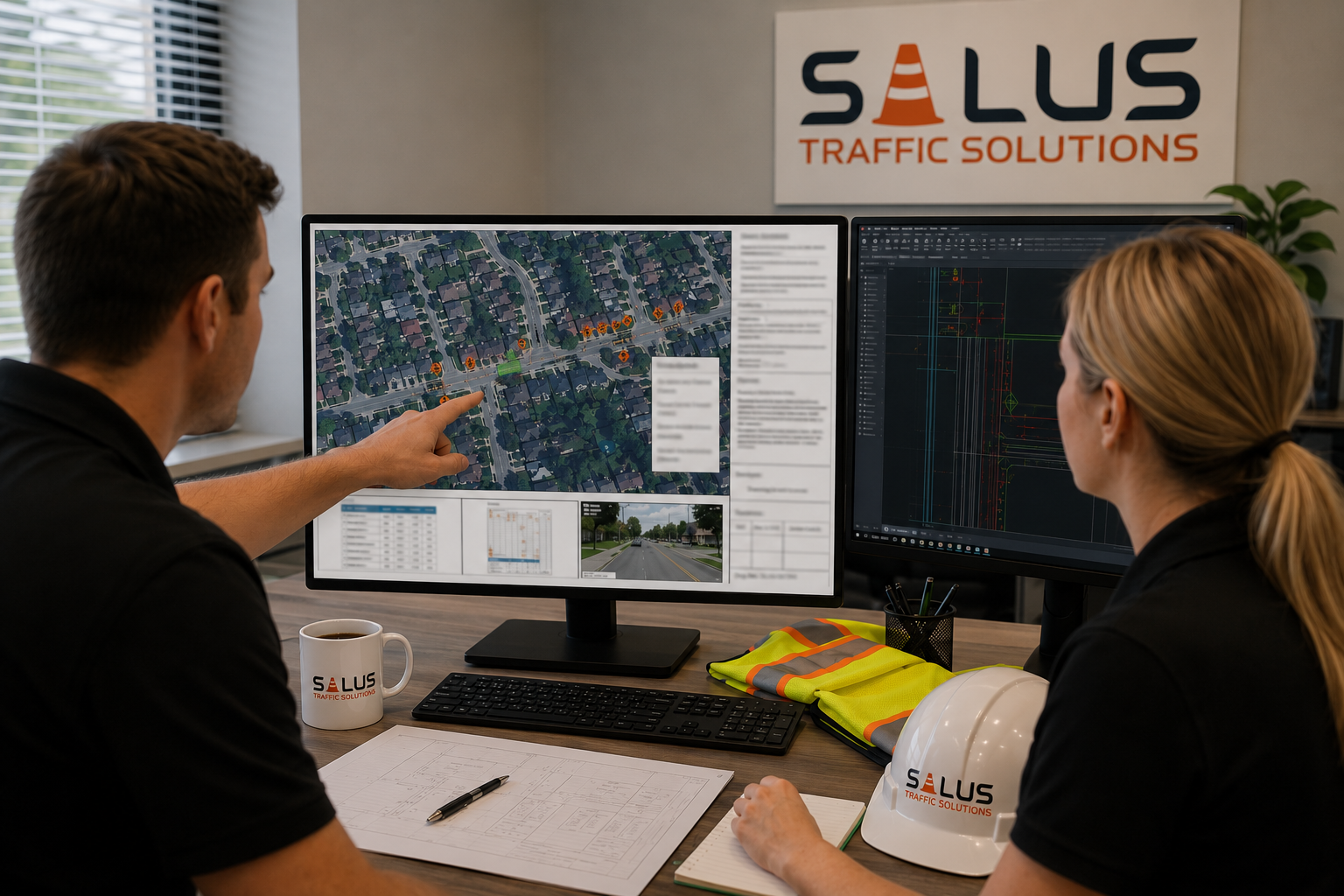
If you need to put a bin, a lift, hoarding or a lane closure on a Toronto street, the first surprise is that the City doesn’t call it a road occupancy permit. Toronto splits the job into separate approvals. You get a Street Occupation Permit from Transportation Services, then book the closure through RoDARS. Building projects that need a lane or sidewalk for months go one step further and apply for a construction staging area.
Most delays come from doing these in the wrong order or leaving one out. Below is how to get a road occupancy permit in Toronto, step by step, and where applications tend to stall.
Step 1: Confirm the road authority and the permit type
Not every road in the city falls under the City of Toronto. Provincial highways fall under MTO, and if your work crosses into Peel or York Region, those regions run their own permit systems. Sort this out before anyone draws a plan.
Then check which permit fits the work. A Street Occupation Permit covers temporary use of the boulevard, sidewalk, roadway or a public lane for construction. Cutting into pavement or a sidewalk needs a utility cut or non-utility cut permit instead.
Step 2: Apply for the Street Occupation Permit
This permit covers most construction setups that spill past the property line: disposal bins, stored materials, scaffolding, hoarding, covered walkways, concrete pumps, swing stages and cranes.
A complete package usually includes:
- The City’s permit application form
- Scaled drawings in metric showing property lines, dimensions, trees, hydro poles, hydrants, a north arrow and any parking spaces you’ll take
- A construction traffic management plan built to Ontario Traffic Manual Book 7
- A closure letter explaining how you’ll use the space, how long you need it and your work schedule
Tower cranes need more: a certificate of insurance naming the City, approvals from Transport Canada and Nav Canada, and engineer-stamped drawings for the foundation and counterweight. Expect roughly 12 weeks for a crane once the City has everything.
Two other things catch people out. If your site sits inside one of the City’s Construction Hubs, long-term permits cost more than they would elsewhere. If it falls inside a Metrolinx review zone, you’ll also need a Corridor Development Permit or a No Conflict letter from Metrolinx before the closure can be booked.
Step 3: Book the closure through RoDARS
RoDARS is the City’s online system for scheduling anything that occupies the public right-of-way, including sidewalks, bike lanes, boulevards and shoulders. It doesn’t replace the permit, and the City won’t accept an application until the permit is issued.
Pick the right form. Street Occupation Permit holders use Form 1SOP, developers use Form 2, and utilities, City agencies and Metrolinx each have their own. Then watch the deadlines, which count working days and close at 5 p.m.:
- 1 to 10 days of occupation: apply at least 5 working days before the start
- More than 10 days, or any full lane closure: at least 10 working days
- Work on the Gardiner, the Don Valley Parkway or Allen Road: at least 10 working days
Expedited reviews exist, but they cost extra and the City doesn’t guarantee them.
Once approved, you’ll get a QR code sign by email. It has to be posted in the work zone before the closure goes up. If your dates or layout change, a revised notification has to be approved at least one business day before the change. The City charges for extra inspections when the sign is missing or the traffic control on site doesn’t match what was approved.
Step 4: Apply for a construction staging area for long-term closures
When a building project needs a curb lane or sidewalk for months, the request goes through a City staff report and a council decision. Community Council can decide many of these. Others, such as streets with TTC service, go to City Council. Plan on several months.
You’ll need to show why staging can’t happen on your own property. Approvals come with conditions, and recent ones in Toronto have included:
- A covered, accessible pedestrian walkway for the full duration
- Daily cleaning of the sidewalk and road, plus snow and ice clearing
- Traffic control persons and paid duty police, in numbers set by the City and Toronto Police
- A fixed end date, with any extension going back through a new report
Budget for those conditions early, because they last as long as the staging area does.
Where applications get stuck
The usual hold-ups we see:
- Drawings that aren’t to scale or leave out hydrants, poles or parking
- A traffic plan copied from another job that ignores the posted speed or the pedestrian route
- RoDARS filed before the permit is issued, or on the wrong form
- Dates that change on site without a revised notification
- Crews setting up before the QR code sign is posted
Inspectors check that what’s on the road matches what was approved, so the plan only helps if the crew builds it exactly. Our crews work to documented safety and compliance procedures for every Toronto work zone, including daily site reports and photos of every setup.
Getting help with the paperwork
If you’d rather not chase coordinator comments yourself, our road occupancy permit services in Toronto cover the Book 7 plan, scaled drawings, closure letters and RoDARS filing, plus revisions when dates move. When the permit comes through, the same team can build and maintain the closure. To talk through your site, reach out to Salus Traffic Solutions, a traffic control and permitting company serving Toronto and Ontario. Send the address, work dates and what needs to sit in the road, and we’ll tell you which approvals apply and roughly how long they’ll take.


